

You CH. et al., 2026: A close look at the evidence on low-intensity shockwave therapy in erectile dysfunction -a systematic review and meta-analysis of randomized controlled trials.
You CH, Kang YN, Wen YC, Lee LM, Lin KH, Hsiao CH, Syu SH, Lai CH, Chung CH, Kao CL, Chou SC, Lin YW.
J Sex Med. 2026 Mar 7;23(4):qdag070. doi: 10.1093/jsxmed/qdag070
Abstract
Introduction: Erectile dysfunction (ED), defined as the inability to achieve or maintain an erection sufficient for satisfactory sexual performance, is a prevalent condition among men and has a significant impact on quality of life. Among the emerging therapeutic options, low-intensity extracorporeal shockwave therapy (LI-ESWT) has gained attention due to its proposed regenerative effects. Despite a growing number of studies suggesting the efficacy of LI-ESWT, the overall quality of the evidence remains limited, with heterogeneity in treatment protocols and study designs.
Objectives: This study aims to synthesize the available evidence from randomized controlled trials (RCTs) to identify and evaluate the therapeutic parameters associated with optimal outcomes of LI-ESWT in the treatment of ED. By clarifying treatment protocols, this review seeks to provide guidance for clinical practice and inform future research design.
Methods: Adhering to the Preferred Reporting Items for Systematic Reviews and Meta-Analyses guidelines, the study protocol was registered with PROSPERO (CRD42024581988). Searches were conducted in PubMed, Embase, Cochrane CENTRAL, and ClinicalTrials.gov up to October 30, 2024, to evaluate the efficacy of the therapy. Risk of bias was evaluated using the Cochrane risk-of-bias tool (version 2, RoB 2) for the included RCTs. As for the heterogeneity across the RCTs, subgroup and meta-regression analyses were conducted to mitigate heterogeneity and identify the most effective treatment protocols.
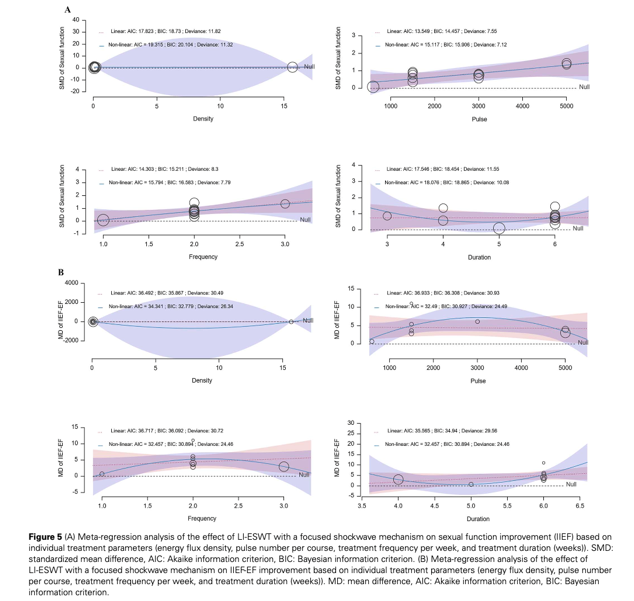
Results: Nineteen RCTs met our inclusion criteria. The majority of included studies exhibited important methodological limitations, most notably the limited use of the International Index of Erectile Function erectile function domain (IIEF-EF; 6 items) as the standardized outcome measure. Pooled analyses demonstrated that LI-ESWT significantly improved erectile function at 1-month, 3-month, and 6-month follow-ups, with statistically significant improvements in IIEF. However, confidence in long-term effects was reduced due to the limited number of studies reporting 6-month outcomes. Meta-regression analyses indicated that treatment frequency and pulse number per course were associated with therapeutic response.
Conclusions: Although several RCTs demonstrated statistically significant improvements in erectile function following LI-ESWT, the majority of studies failed to achieve the minimally clinically important difference. Therefore, based on the currently available evidence, it remains unclear whether LI-ESWT provides a clinically meaningful benefit for ED at the present time. No definitive conclusions can be drawn regarding the superiority of any specific treatment regimen.
Comment Jens Rassweiler
Introduction
Erectile dysfunction (ED) is a prevalent condition affecting many men, particularly those aged 40-70, and can significantly impact quality of life. The causes of ED are multifactorial, including physical and psychological factors, and lifestyle habits such as smoking and obesity. Low-Intensity Extracorporeal Shockwave Therapy (LI-ESWT) is a treatment option for ED, but its clinical application is debated due to inconsistencies in study results and methodologies.
Evidence and Recommendations
The European Association of Urology (EAU) recognizes LI-ESWT as a viable option for certain patients but offers a weak recommendation due to significant variability in research findings. Conversely, the American Urological Association (AUA) views LI-ESWT as investigational, highlighting concerns over treatment durability and methodological flaws in studies. The meta-analysis aimed to consolidate evidence regarding the effectiveness of LI-ESWT by analyzing randomized controlled trials (RCTs) while addressing the heterogeneity in treatment protocols.
Methods
The systematic review followed PRISMA guidelines and included RCTs comparing LI-ESWT to placebo. Key outcomes were measured through the International Index of Erectile Function (IIEF) as the primary outcome, with secondary measures including the Erectile Hardness Score (EHS) and Sexual Encounter Profile (SEP) questions. Methodological quality was assessed using the Cochrane risk-of-bias tool, and statistical analyses were performed to evaluate the treatment effects and potential sources of variability.
Results
The meta-analysis included 19 RCTs with a total of 1,180 patients. Key findings included:
- Improvements in IIEF Scores: Statistically significant improvements were noted at 1, 3, and 6 months post-treatment, with effect sizes indicating moderate to large clinical significance.
- EHS Scores: There were significant improvements in EHS at both 1 and 6 months.
- Subgroup Analyses: Improvements were consistent across different severities of ED. Focused shockwave therapy showed greater efficacy than other modalities.
- Meta-Regression Analysis: Treatment frequency emerged as a significant factor influencing outcomes, suggesting that a regimen of 3000 pulses per session with a frequency of 2 Hz administered and a total of 6 treatments delivered once or twice a week may optimize results (Fig. 5). This is an interesting approach to determine the results of this meta-analysis.
Discussion
Limitations
The analysis noted several limitations:
- Many studies did not achieve the minimally clinically important difference (MCID) in IIEF scores, questioning the clinical relevance of the findings.
- Limited long-term follow-up data hindered assessments of sustained effects.
- Most studies relied on subjective measures rather than objective evaluations of erectile function.
Conclusion
While LI-ESWT showed statistically significant improvements in erectile function across multiple trials, it remains uncertain whether it constitutes a definitive clinical therapy for ED due to variability in study quality and treatment protocols. The article suggests further research is needed to establish standardized treatment parameters and to explore the long-term efficacy of LI-ESWT for ED.
Jens Rassweiler


Comments