
Kidney stones can also occur in children, and the number of cases is increasing worldwide.1 For parents, this can be worrying — but there are effective and gentle treatment options available.
One of these options is Extracorporeal Shock Wave Lithotripsy (SWL). It uses acoustic pulses to break the stone into small pieces, which can then pass naturally through the urinary tract.
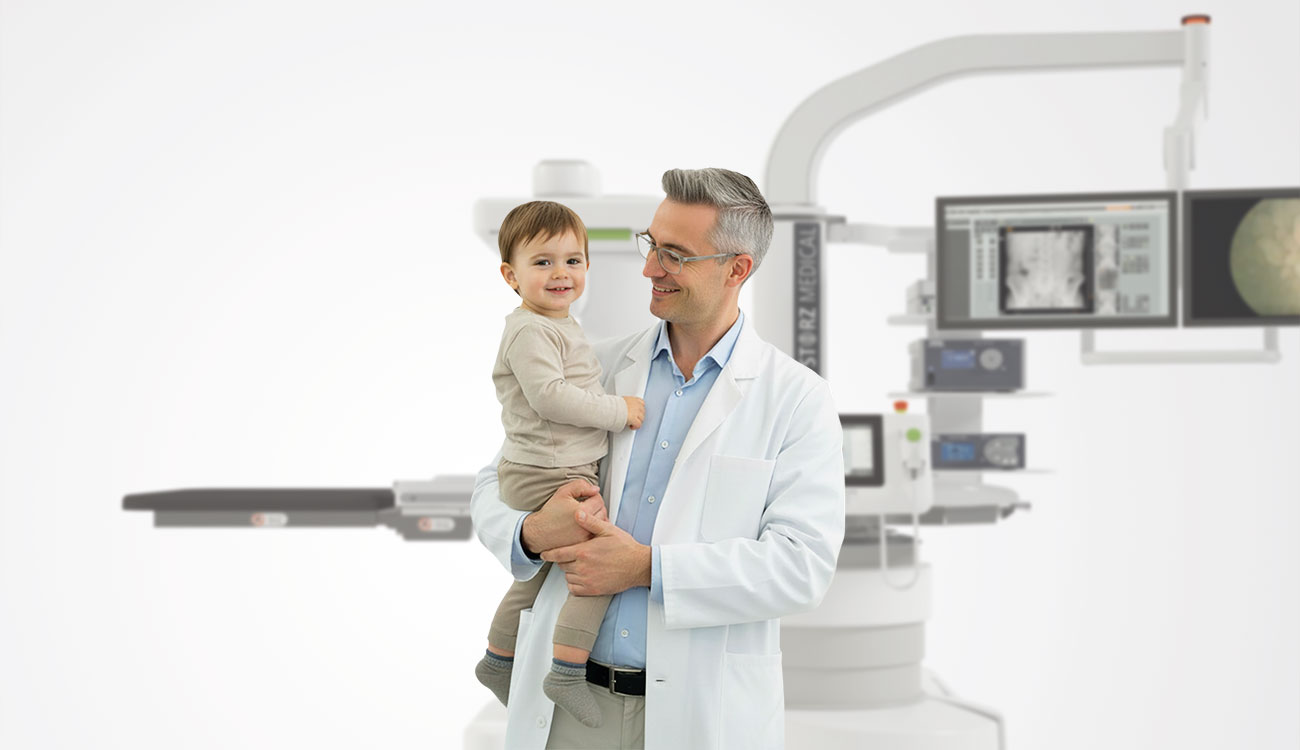
What is SWL?
SWL is a non-invasive medical treatment that uses acoustic pulses (shock waves) generated outside the body to break down kidney and ureteral stones. These waves are focused precisely on the stone, where they fragment it into small pieces that can then pass naturally through the urinary tract.
SWL is a non-invasive treatment, this means:
- No surgery is required
- No incisions or surgical instruments are used
Is SWL safe for children?
Studies and international medical guidelines recommend SWL as a safe and effective treatment for many children with kidney or ureteral stones smaller than 20 mm. 2
Studies show that SWL in children is:
- Effective 4
- Associated with low pain levels
- Linked to mild and temporary side effects in most cases, serious adverse effects are rare* 3
- Some patients may require re-treatment**
Children often recover more quickly with SWL and can return to school and normal activities soon after treatment.
What will my child experience?
SWL is usually performed as an outpatient procedure, which means your child can go home the same day.
During treatment:
- Your child lies comfortably on a treatment table
- Depending on your child’s age, the treatment is performed under appropriate anaesthesia or sedation to ensure comfort 2
- The medical team carefully monitors the position of the stone using imaging (often ultrasound)
- The treatment is individually adjusted to your child
After treatment:
- Most children experience only mild symptoms, such as slight pain or temporary blood in the urine
- Side effects are usually short-lived
- Children can usually return to normal activities, including school, quite quickly
How effective is the treatment?
SWL has been shown to be highly effective in children:
- High stone clearance rates are reported in clinical studies 4
- Many children become stone-free after one or a few sessions 4
- In most cases, no additional procedures are needed
- For ureteral stones, success rates above 90% have been reported 5
In general, children often respond particularly well to SWL, as stone fragments can pass more easily than in adults. 2
A recent clinical study also showed that SWL achieves comparable treatment success to ureteroscopy (URS), another commonly used method. 6
Why parents often choose SWL
Parents often prefer SWL because it is:
- Non-invasive
- Associated with low pain levels
- Performed without surgery
- Usually done on an outpatient basis
- Designed to minimise stress for the child
A treatment designed for children
Modern lithotripters are specifically designed to meet the needs of young patients. For example, systems such as the MODULITH SLX-F2 allow:
- Precise adjustment of shock wave energy
- Treatment adapted to the child’s body
- Accurate targeting of the stone using imaging
The MODULITH SLX-F2 is currently the first lithotripter system in the United States with FDA clearance for the treatment of kidney and ureteral stones in children from the age of three. 7
Talk to your doctor
Every child is different. The best treatment depends on factors such as the size and location of the stone, as well as your child’s individual situation.
A specialist can help you decide whether SWL is the right option.
*28% of children may suffer minor complications such as blood in the urine and pain, while 3% may experience serious complications such as symptomatic renal hematoma, sepsis or urinoma requiring treatment.
**Approx. 40 % of patients might require a second SWL session. Approx. 12 % of patients might require other treatments such as URS or PCNL.
Sources
1. Hu, J., et al. (2025). Global, Regional, and National Epidemiology of Pediatric Urolithiasis (1990-2021) and 2040 Forecast. The Journal of Urology 214(4):p 435-445. https://doi.org/10.1097/JU.0000000000004645
2. EAU Guidelines. Edn. presented at the EAU Annual Congress Madrid 2025 https://uroweb.org/guidelines/urolithiasis
3. Chatzikrachtis, N., et al. (2023). Complication rate after pediatric shock wave lithotripsy according to Clavien–Dindo grading system: results from a systematic review and metanalysis of the existing literature. World Journal of Urology, 41(4), 829–835. https://doi.org/10.1007/s00345-022-04267-x
4. Grabsky, A., et al. (2021). Effectiveness of ultrasound-guided shockwave lithotripsy and predictors of its success rate in pediatric population: A report from a national reference center, Journal of Pediatric Urology, 17(1), 78.e1–78.e7. https://doi.org/10.1016/j.jpurol.2020.10.014
5. Tiselius H-G. How Efficient Is Extracorporeal Shockwave Lithotripsy with Modern Lithotripters for Removal of Ureteral Stones? Journal of Endourology. 2008;22(2):249-256. doi:10.1089/end.2007.0225
6. Tasian, G. E., et al. (2025). Ureteroscopy vs Shockwave Lithotripsy to Remove Kidney Stones in Children and Adolescents: A Nonrandomized Clinical Trial. JAMA Network Open, 8(8), e2525789. https://doi.org/10.1001/jamanetworkopen.2025.25789
7. FDA 510(k) database, K201001: https://www.accessdata.fda.gov/cdrh_docs/pdf20/K201001.pdf


