

Yang CC. et al., 2026: Relapse Following Ultrasonic Propulsion-Facilitated Clearance of Residual Kidney Stone Fragments Versus Observation.
Yang CC, Holt SK, Desai AC.
J Endourol. 2026 Feb;40(2):246-251. doi: 10.1177/08927790251394321
Abstract
Background: In patients with residual kidney stone fragments after treatment, ultrasonic propulsion (UP) reduced risk of relapse by 70% over 5 years compared with untreated controls. This study presents a second, independent trial of UP to reduce relapse of stone-related events at 1 year follow-up.
Materials and methods: In this multicenter, open-label, randomized, controlled trial, 24 adults with residual fragments ≤5 mm at least 4 weeks after operation an for kidney stones were enrolled. Using block randomization (4), participants were randomized to treatment (n = 12) with UP or observation (n = 12). The primary outcome was relapse, defined as a symptomatic stone event necessitating medical attention or operation within 1 year of enrollment. The cumulative incidence of relapse was estimated using the Kaplan-Meier method. Log-rank test was used to compare the treatment (UP) and control (observation) groups.
Results: The trial was conducted from April 2024 to June 2025. Fragments remained a median of 6 months after procedure before study enrollment. Median (interquartile range) follow-up was 358 (342-365) days. There were no relapse events in the treatment group, whereas 50% of the control group had a relapse event (6/12, p < 0.005). The restricted mean time-to-relapse in the control group was 105 ± 48 days.
Conclusions: Removal of residual stone fragments by UP reduced relapse of symptomatic stone events and need for operation in the year after intervention, compared with observation.
Comment Hans-Göran Tiselius
The article describes successful clearance of residual fragments after SWL. Although the comparison was carried out in a small number of intervention and control patients, the result is impressive. A method that can be used to eliminate small residual fragments is what we miss to make non-invasive (least invasive) stone removal optimally successful. In most comparative studies of SWL and other low-invasive methods the presence of small residuals makes SWL a less successful alternative, particularly for treatment of lower calyx stones. But also, stones treated in other parts of the kidney can end up with residuals in the lower calyx.
The method described with ultrasonic propulsion successfully increased fragment clearance and reduced relapses of stone events during a follow-up period of one year.
It is indeed desirable to have non-invasive and non-anesthesia requiring tools to improve the outcome of SWL. It is surprising; however, how little effort has been spent to get higher stone-free rates after SWL. Different methods of inversion treatment have shown good results, but the ultrasound propulsion (UP) appears more effective.
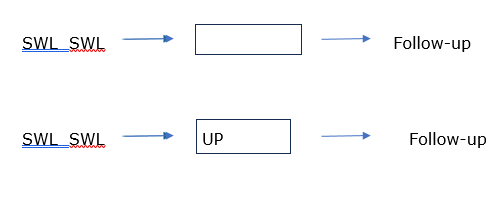
Importantly, failure of treatment after SWL should not be interpreted as poor effect of SWL, but of insufficient capacity of the renal collecting system to eliminate small residual fragments. Ideally, SWL should be combined with follow-up ultrasound propulsion whenever residual fragments are demonstrated!
Hans-Göran Tiselius


Comments