
Jiaxin Li, Yao Du, Gaoming Huang, Chiyu Zhang, Zhenfeng Ye, Jinghui Zhong, Xiaoqing Xi, Yawei Huang
iScience. 2024 Oct 23;27(12):110843. doi: 10.1016/j.isci.2024.110843 FREE TEXT
Abstract
Preoperative diagnosis of infection stones presents a significant clinical challenge. We developed a machine learning model to predict urinary infection stones using computed tomography (CT) values, enabling in vivo preoperative identification. In this study, we included 1209 patients who underwent urinary lithotripsy at our hospital. Seven machine learning algorithms along with eleven preoperative variables were used to construct the prediction model. Subsequently, model performance was evaluated by calculating AUC and AUPR for subjects in the validation set. On the validation set, all seven machine learning models demonstrated strong discrimination (AUC: 0.687-0.947). Additionally, the XGBoost model was identified as the optimal model significantly outperforming the traditional LR model. Taken together, the XGBoost model is the first machine learning model for preoperative prediction of infection stones based on CT values. It can rapidly and accurately identify infection stones in vitro, providing valuable guidance for urologists in managing these stones.
Comment Peter Alken
First time I saw a graphic abstract (Fig.1)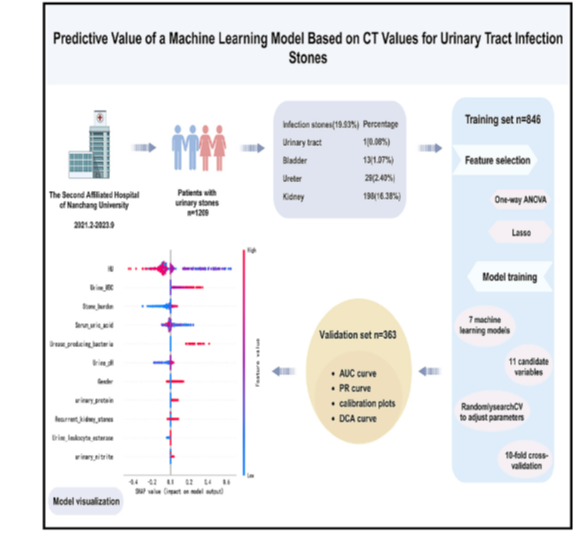
Fig 1 (from: Li J, et al. Predictive value of machine learning model based on CT values for urinary tract infection stones. iScience. 2024 Oct 23;27(12):110843. doi: 10.1016/j.isci.2024.110843. PMID: 39634558; PMCID: PMC11616073.)
The paper is a mixture of references to very old (1) and more recent urological literature, which on the one hand shows knowledge of urological history and contemporary techniques. Secondly, it is about modern software applications for data acquisition and processing and, finally, about the application of machine learning techniques to find the optimum prediction tool. Even for non-digital natives, the individual steps are well outlined. 11variables were selected for evaluation in 7 machine learning protocols. Gender, stone burden, recurrent kidney stones, HU, Urine PH, Urinary protein, Urinary nitrite, Urine leukocyte esterase, Urine WBC, Urease producing bacteria, Serum uric acid.
To my surprise Radiomics are not part of the game, instead the authors argue: “The incorporation of conventional clinical parameters in our machine learning prediction model not only ensures accessibility and user-friendliness but also eliminates the need for complex technical requirement.”
The clinical consequences are not readily visible. It would be nice to know the answer to the question: Is this an infection stone? when x of the 11 factors are missing or negative resp. The SHAP values (Fig 2) do not give an easy answer to a non-digital native (2,3).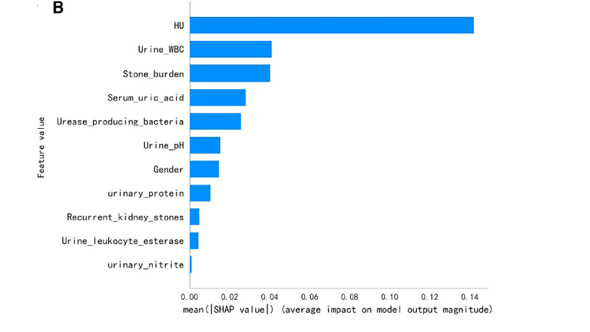
Fig 2 (from: Li J, et al. Predictive value of machine learning model based on CT values for urinary tract infection stones. iScience. 2024 Oct 23;27(12):110843. doi: 10.1016/j.isci.2024.110843. PMID: 39634558; PMCID: PMC11616073.)
1 Priestley, J.T., and Dunn, J.H. (1949). Branched renal calculi. J. Urol. 61, 194–203. https://doi.org/10.1016/s0022-5347(17)69052-9.
2 https://shap.readthedocs.io/en/latest/example_notebooks/overviews/An%20introduction%20to%20explainable%20AI%20with%20Shapley%20values.html
3 https://www.datacamp.com/de/tutorial/introduction-to-shap-values-machine-learning-interpretability
Peter Alken